

Rugby asks supporters to accept an extraordinary amount of complexity. They must understand shifting offside lines, distinguish legal pressure from illegal interference, and recognise why apparently identical incidents produce different decisions. In return, they deserve consistent enforcement and explanations they can follow.
When those explanations are absent, frustration becomes distrust. That is a commercial problem as well as a sporting one.
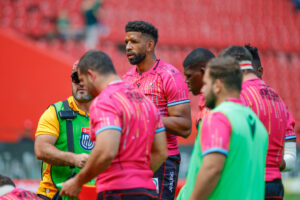
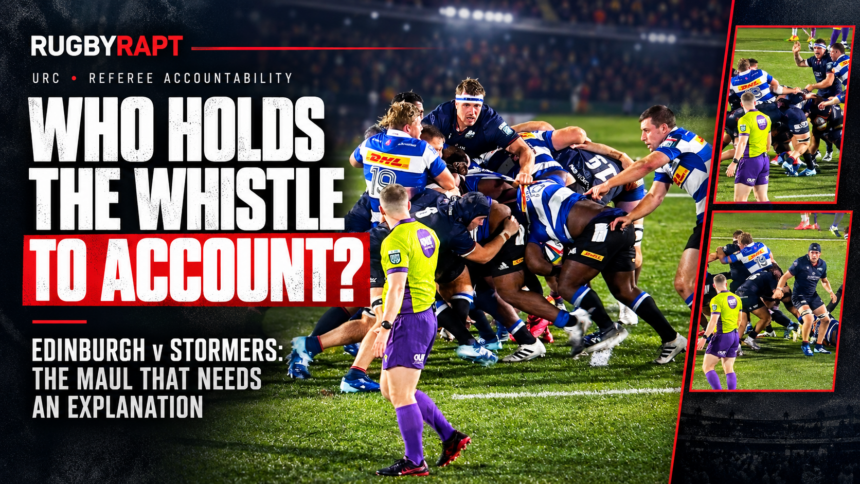
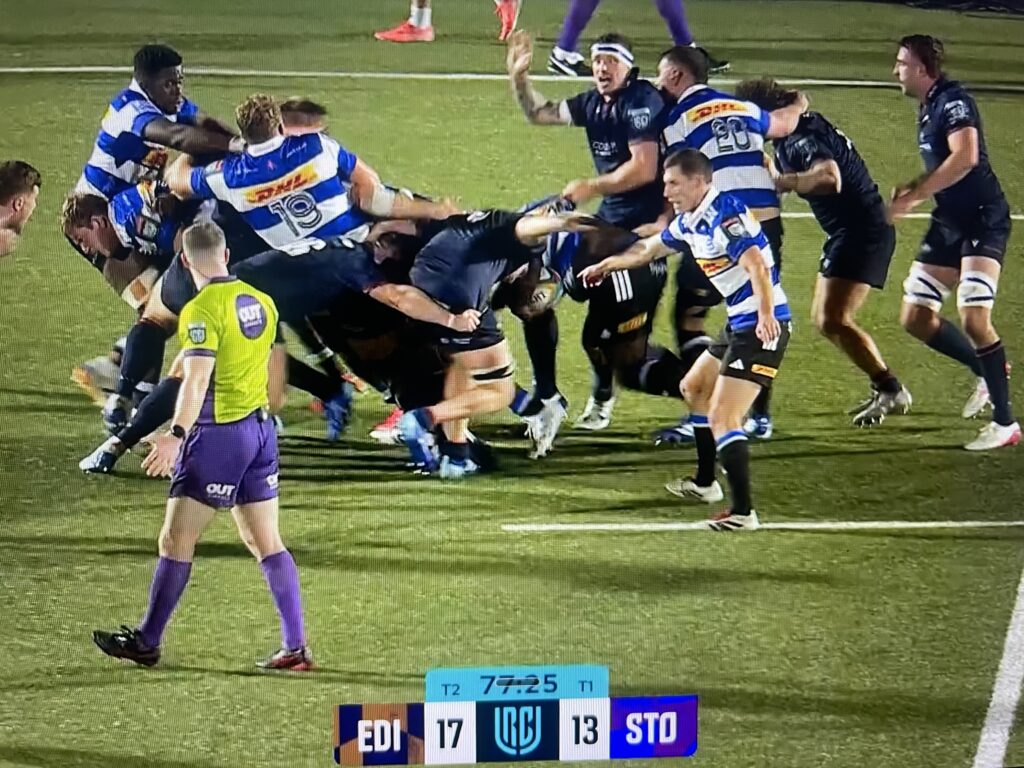
The late Stormers maul against Edinburgh provides a concrete case for scrutiny. The supplied broadcast images show Edinburgh leading 17–13, with the clock around 77:24–77:26. Defenders occupy positions around the side of the maul as its structure breaks down. Referee Eoghan Cross is nearby. The question is straightforward: were those defenders still participating legally?
The pictures warrant examination. They do not, alone, establish every player’s entry point, continuity of binding or responsibility for the collapse. A defender’s position at the end of a rotating maul does not automatically prove illegal entry. Objective criticism must establish the offence before condemning the official.
Yet the applicable standard is clear. World Rugby’s June 2026 maul guidance says players must join legally and remain properly bound. Defenders may contest possession or drive, but cannot swing around into disruptive positions and pull or drag the maul. Players who lose their legal position must leave and, if rejoining, do so legally. These requirements apply to both teams.

That makes this an accountability question. Did Edinburgh’s defenders maintain a lawful bind and contest? Did anyone detach and re-enter illegally? Was the collapse intentional? The URC should explain the sequence against the relevant provisions, using continuous footage. If the decision was correct, demonstrate why. If an infringement was missed, acknowledge it.
Who supervises this? The URC’s Head of Match Officials, Tappe Henning, has described a review and selection process involving former international referees, with performances informing appointments. Oversight therefore exists. Suggesting referees answer to nobody would be inaccurate. The harder question is whether supporters receive enough evidence to understand that oversight and judge its effectiveness.
There is also a second voice. Assistant referees support the referee, while the television match official operates within a defined protocol. But the TMO is not authorised to revisit every ordinary infringement anywhere on the field. The published protocol places maul-offside reviews within specified scoring-related limits; foul play has a separate scope. Demanding intervention without checking that jurisdiction risks misdiagnosing the failure.



Comparison with other sports should focus on accountability rather than unsupported claims that rugby officials are uniquely poor. Football’s Match Officials Mic’d Up demonstrates how selected incidents and officials’ communications can be explained publicly. Rugby should make equally rigorous explanations routine.
The commercial danger is cumulative. A disputed maul does not prove supporters are cancelling subscriptions. But a competition that repeatedly leaves customers unable to understand decisive rulings risks weakening their willingness to invest money and emotion. Anger may generate engagement today; sustained distrust offers no dependable foundation for tomorrow’s audience.
That risk becomes sharper at the 2027 World Cup. A comparable missed infringement in a knockout match could end a campaign. World Rugby should demand consistent application before the tournament, supported by shared video examples and clear intervention responsibilities.
The answer is not public humiliation of referees. It is professional transparency: publish the decisive sequence, identify the law and explain the assessment. Where errors recur, show how training and selection address them.
Respect for officials and scrutiny of their decisions belong together. Rugby cannot sell the significance of every contest while leaving supporters guessing about the rules that decided it.