


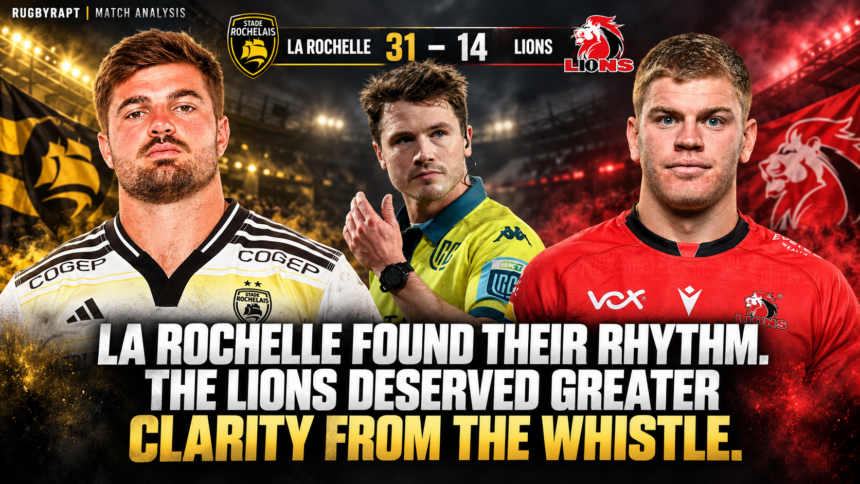
La Rochelle found enough momentum to beat the Lions. They did not produce a performance that should silence questions about how the contest was managed. Against a French side that began disjointed before gradually imposing itself, the Johannesburg visitors fought with conviction. Their resistance deserves recognition. So does the frustration surrounding referee Sam Grove-White’s decisions.
The distinction matters. La Rochelle deserve credit for recovering their shape and finding a route through a stubborn opponent. But acknowledging that recovery does not place the officiating beyond scrutiny. A result can reflect a winning team’s persistence while still leaving serious questions about decisions that influenced the balance of play.
Initially, La Rochelle looked like a collection of dangerous individuals searching for a shared rhythm. The Lions brought the urgency, competing with an appetite that made the hosts work for their authority. There was nothing inevitable about the French side’s eventual control. It developed over time, against opponents who refused to accept a supporting role.
For the Lions, that makes the disputed decisions particularly difficult to swallow.
Grove-White’s management belongs at the centre of the discussion, especially the early yellow cards, the complaints over side entries and offside positioning, and the forward-pass ruling that denied the visitors a try. These are consequential interventions, or failures to intervene, in a match where momentum had to be earned.

The early cards appeared severe. Severity, however, is only defensible when the threshold remains consistent. Once a referee establishes a strict standard, players are entitled to expect that standard throughout the contest. Otherwise, one side carries the immediate cost of numerical disadvantage while uncertainty grows over what the other may escape.
That is the substance of the Lions’ grievance. The concern is not simply that decisions went against them. It is whether comparable actions received comparable treatment.
The alleged missed side entries and offside infringements deserve examination on precisely that basis. If the footage substantiates those complaints, they cannot be dismissed as peripheral incidents. Such offences can affect possession, attacking space and the opportunity to sustain pressure. Their cumulative significance deserves as much attention as a conspicuous whistle.

The disallowed try is the sharpest flashpoint. From the Lions’ perspective, a deserved reward disappeared with the forward-pass decision. But the strongest criticism requires more than outrage: it requires the relevant footage and a clear explanation of the ruling. A decision of that importance should withstand public examination. Supporters deserve to understand why it was made.
Marcel-Deflandre’s atmosphere adds another dimension, but crowd pressure is not proof of partiality. Calling Grove-White nervous or biased would substitute an allegation about his state of mind for analysis of his work. The harder, more useful question is whether his decisions were accurate and his standards consistent.
La Rochelle’s recovery must also remain part of the verdict. They improved as the match developed and ultimately converted their growing momentum into victory. Reducing that entirely to refereeing would overlook their contribution and weaken the legitimate case for scrutiny.
Equally, the Lions’ performance needs no inflated claim about opponents possessing ten times their squad or revenue. Without comparable figures, that assertion distracts from what matters: the visitors made La Rochelle earn the contest and continued fighting as it moved against them.
The Lions deserved more than sympathetic applause for their effort. They deserved demonstrably consistent decisions, with clear explanations for the calls that carried greatest weight.
La Rochelle leave with the victory. Grove-White’s performance should face a separate assessment. Rugby can respect its referees while demanding accountability from them. In a contest this fiercely contested, asking whether the whistle helped determine its direction is neither disloyal nor unreasonable. It is necessary.