

How Johannesburg Came Within Six Points of Humbling the All Blacks — and Reminded the Rugby World What the Lions Stand For
The scoreboard says All Blacks 41, Lions 35.
But sometimes a scoreboard doesn’t tell you what actually happened.
Look instead at the photographs after the final whistle.
Look at the exhausted Lions players shaking hands with men wearing the most famous black jersey in rugby. Look at the smiles. The embraces. The exchanged jerseys. Look at players who had spent 80 minutes trying to knock one another backwards now standing together on the Ellis Park turf.

Those photographs tell the real story.
This wasn’t simply another New Zealand victory.
This was a night when Johannesburg rugby rediscovered its roar.
And it was a night when a young, fearless Lions team reminded the rugby world that there remains something very special about the red and white jersey from the heart of Gauteng.
They Had Beaten Everyone Else
Consider what had happened before the All Blacks arrived back at Ellis Park.
New Zealand had beaten the Stormers 38–21 in Cape Town.
They demolished the Sharks 54–0 in Durban.
They overwhelmed the Bulls 50–19 at Loftus.
Then came the Springboks.

At Ellis Park, the world champions were beaten 33–16.
New Zealand appeared to be gathering momentum with every match they played in South Africa.
And then, three days after beating the Springboks on the very same ground, the All Blacks walked back into Ellis Park.
Waiting for them were the Lions.
What happened next was extraordinary.
14–0: Johannesburg Suddenly Believed
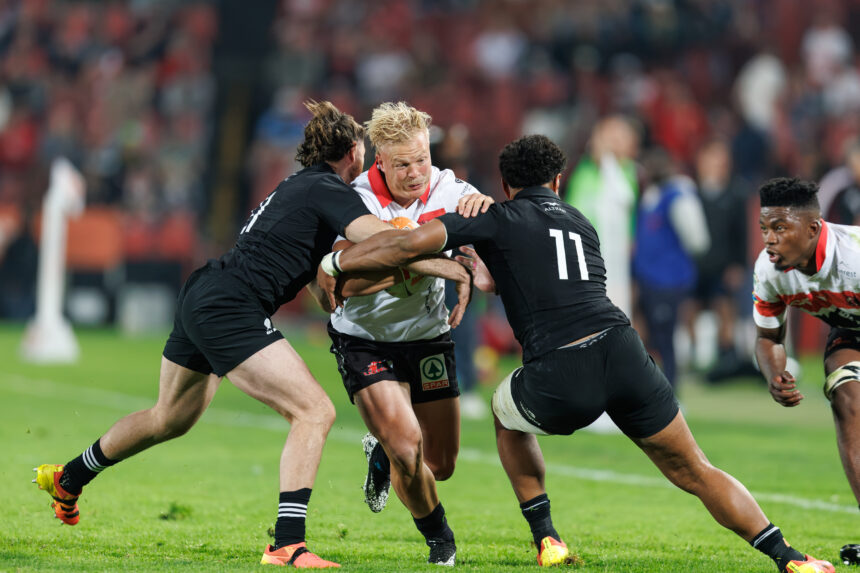
The Lions didn’t spend the opening minutes admiring the opposition.
They attacked them.
Nico Steyn struck first.
Then Sibabalwe Mahashe intercepted a loose Noah Hotham pass and suddenly the scoreboard read:
LIONS 14–0 ALL BLACKS.
Seven minutes.
Fourteen points.
And Ellis Park was alive.
New Zealand responded, because New Zealand always responds.
But every time the visitors appeared ready to impose themselves, the Lions found something else.
Kelly Mpeku finished superbly in the corner.
At halftime:
Lions 21. All Blacks 17.
There was still a feeling that the inevitable New Zealand surge would come.
Instead, the Lions attacked again.
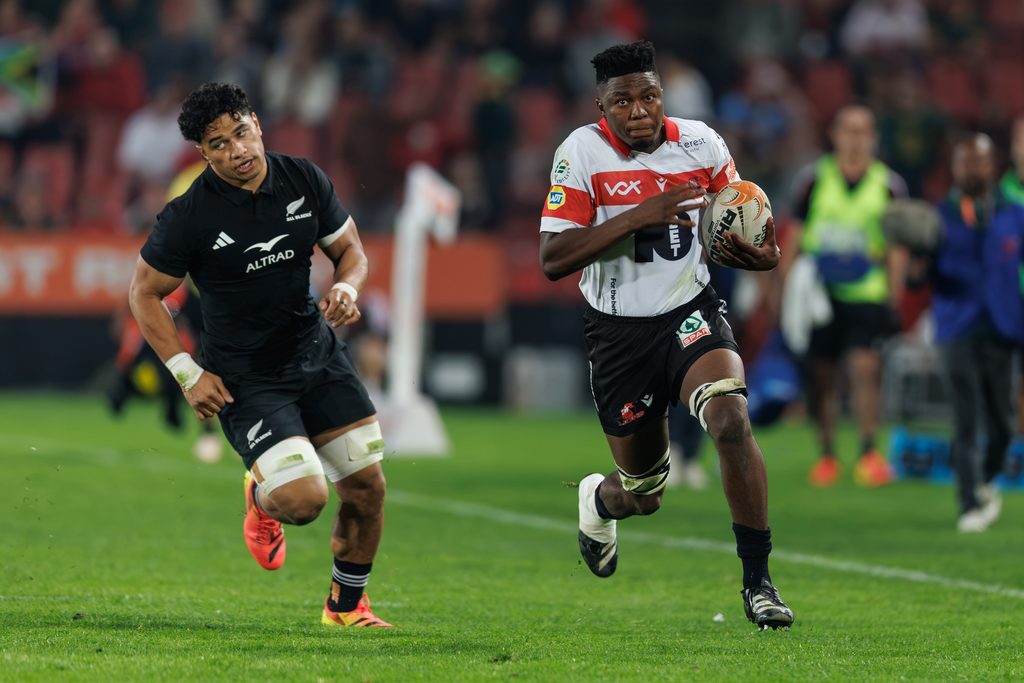
Mahashe broke free.
Erich Cronje finished the movement.
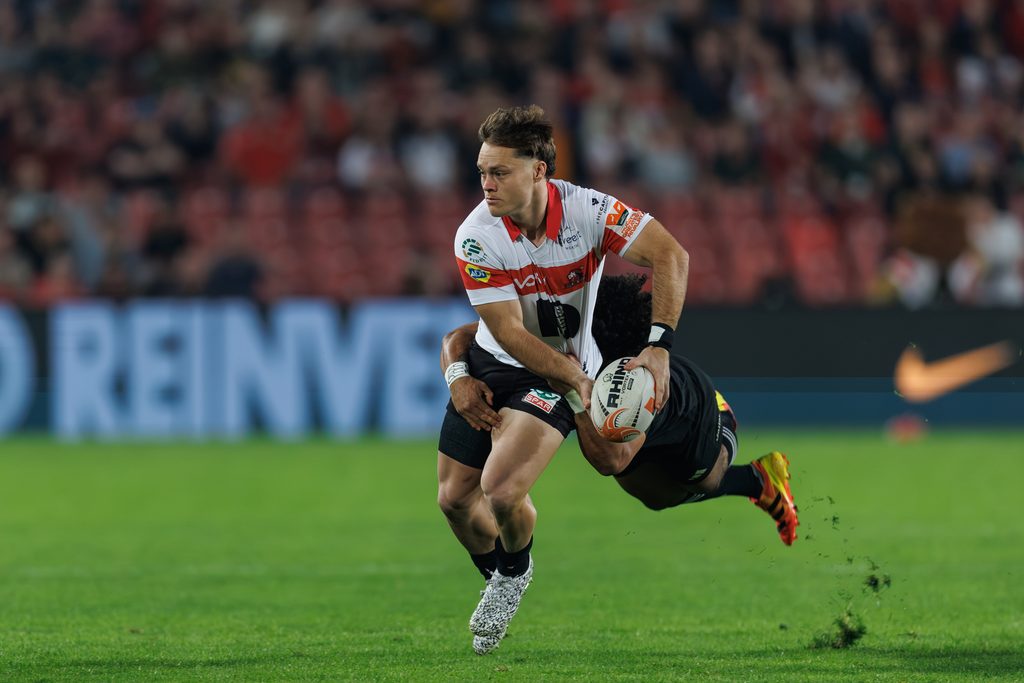
Then captain Francke Horn powered over.
Chris Smith converted.
And suddenly, seven minutes into the second half, one of the most remarkable scorelines of the entire tour was sitting above Ellis Park:
LIONS 35
ALL BLACKS 17
Reuters recorded it as an 18-point deficit New Zealand had to overcome.
Stop there for a moment.
Three days earlier, the Springboks had managed 16 points against the All Blacks across 80 minutes.
The Lions had scored 35 in 47.
Then the All Blacks Showed Why They Are the All Blacks
It is important not to romanticise what happened next.
New Zealand were not finished.
Great rugby nations rarely are.
Rieko Ioane changed the momentum with two tries. Ethan Blackadder struck again. Eventually New Zealand moved in front before Emoni Narawa’s late score provided the final separation.
Twenty-four unanswered points transformed 35–17 into 41–35.
The Lions had come within six points of one of rugby’s greatest sporting prizes.
And yes, this wasn’t precisely the All Blacks Test XV that had beaten South Africa three days earlier. New Zealand rotated heavily.
But look at the names who still stood opposite the Lions.
Beauden Barrett. Richie Mo’unga. Rieko Ioane. Ethan Blackadder. Patrick Tuipulotu. Emoni Narawa. Samisoni Taukei’aho. Anton Lienert-Brown.
This wasn’t some anonymous touring XV.
These were All Blacks.
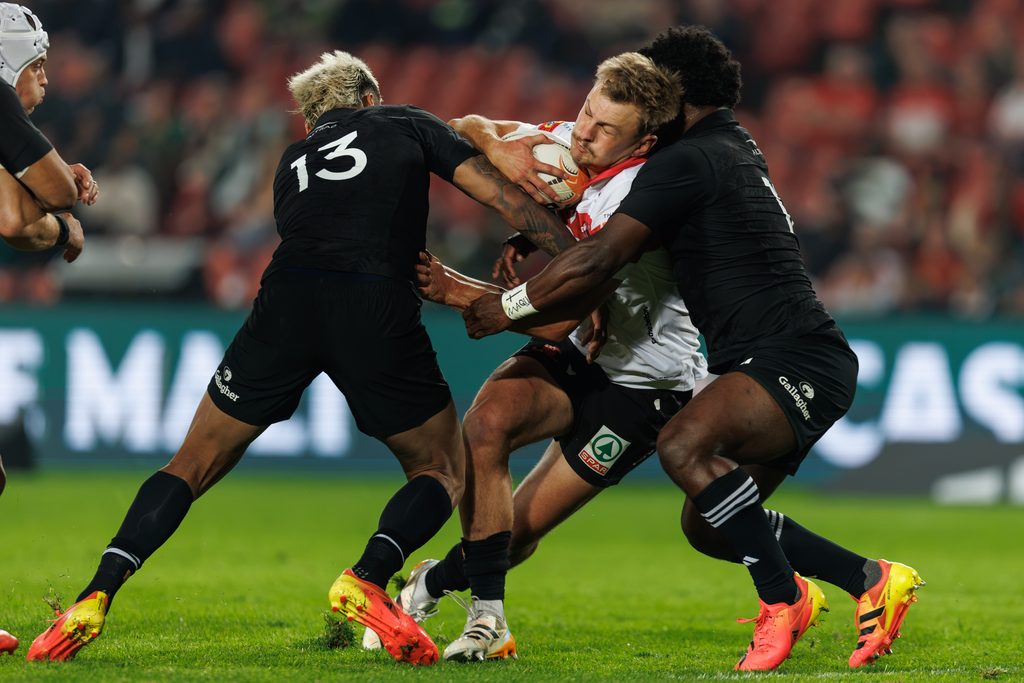
And they had been pushed almost to breaking point.
New Zealand captain Patrick Tuipulotu admitted afterwards that the Lions had put his team under pressure from the beginning and said:
“We got pushed to the limits.”
Perhaps no sentence better describes the Lions’ night.
But Then Came the Photographs
And this is where this story becomes about something more than rugby statistics.
After everything — after the tackles, scrums, tries, interceptions and desperate final minutes — the aggression disappeared.
Hands were extended.
Players embraced.
Jerseys were exchanged.
Black mixed with red and white.
The battle became respect.
And perhaps those are the images that should survive longest from this remarkable night.
Because rugby’s great touring tradition was never only about Test matches.
It was about moments like these.
It was about international players arriving in cities and towns and facing provincial teams who regarded the opportunity as one of the defining nights of their careers.
That tradition has largely disappeared from modern professional rugby.
For one night at Ellis Park, it returned.
Johannesburg Has Been Here Before
There is history beneath that Ellis Park turf.
The modern Lions had never previously played the All Blacks, but Johannesburg rugby certainly had.
New Zealand’s great touring sides faced Transvaal in 1928, 1949, 1960 and 1970. Provincial matches were once central to touring South Africa.
Generations changed.
Names changed.
Competitions changed.
Transvaal became the Golden Lions and ultimately the modern Lions organisation.
But something survived.
The idea that Johannesburg rugby does not bow easily.
Ellis Park is more than concrete, floodlights and seats.
It sits in the middle of one of the world’s great rugby cities.
Around it are schools, clubs, communities and generations of people who grew up understanding what that red and white jersey represents.
Hard rugby.
Fast rugby.
Unfashionable rugby sometimes.
But courageous rugby.
Five Tries. Five Stories.
Nico Steyn.
Sibabalwe Mahashe.
Kelly Mpeku.
Erich Cronje.
Francke Horn.
Five Lions try scorers on a night when Chris Smith converted every one of them.
Those names deserve to be remembered.
Because the Lions didn’t nearly beat New Zealand by trying to survive.
They nearly beat them by playing.
They attacked space.
They took chances.
They backed themselves.
They scrummed.
They counter-attacked.
And most importantly, they refused to accept the script that had seemingly already been written for them.
The Number That Matters: Six
Stormers: beaten by 17.
Sharks: beaten by 54.
Bulls: beaten by 31.
Lions: beaten by six.
And those 35 Lions points carried another remarkable distinction.
According to Reuters, no provincial or club side had ever scored more points against the All Blacks.
That deserves more than a footnote.
It deserves to become part of Lions history.
Pride of Jozi
Some defeats disappear.
Some defeats hurt.
And occasionally there are defeats that reveal something.
This was one of them.
The Lions didn’t receive a trophy.
There will be no victory recorded beside their name.
The official record will forever say:
New Zealand 41 — Lions 35.
Fair enough.
But anyone who was inside Ellis Park knows there was another story being written that night.
It was written in the players refusing to surrender.
It was written in Francke Horn driving across the line.
It was written in Mahashe flying downfield.
It was written in the scoreboard reading 35–17.
And perhaps most beautifully, it was written after the final whistle when men who had spent the evening trying to defeat one another shook hands, embraced and exchanged jerseys.
That is rugby.
That is Johannesburg.
That is the Lions.
They lost the match.
But on a remarkable night at Ellis Park, the Lions roared enough for the entire rugby world to hear them.
And Johannesburg should be very, very proud.